U.S. Military Flintlock Musket · Variant
U.S. 1795 Springfield Flintlock Musket
Identification
How to tell it apart
Not yet documented. This is the field that matters most on a variant page, and it is written from handling examples rather than from sources — so it waits for Butch Schoeller.
From the bench
Parts listed for this variant
How it comes apart
Complete parts breakdown
Grouped the way the arm comes apart, and listed whether or not one is currently for sale.
Lock Assembly
15 parts- Bridle
Supports the tumbler and sear pivots.
- Cock
Holds the flint. Called the hammer in US usage, which is the reverse of British usage — a frequent source of confusion when reading period sources.
- Fly
Prevents the sear catching the half-cock notch during firing.
- Frizzen
The steel struck by the flint. Called the battery, or confusingly the hammer, in British usage.
- Frizzen Spring
Returns the frizzen over the pan and holds it closed.
- Jaw Screw
Tightens the top jaw onto the flint.
- Lockplate
Base plate mounting all lock components.
- Mainspring
Drives the cock forward.
- Pan
Holds the priming powder.
- Pan Bridle
Secures the pan to the lockplate.
- Sear
Catches the tumbler notches at half and full cock.
- Sear Spring
Tensions the sear against the tumbler.
- Top Jaw
Clamps the flint against the cock.
- Tumbler
Rotates with the cock and engages the sear.
- Vent Liner
The channel from pan to main charge.
Stock & Furniture
16 parts- Band Springs
Retain the barrel bands in position.
- Barrel Bands
Secure the barrel to the stock. Band count and style are major identification features.
- Buttplate
Protects the rear of the buttstock. Tang length and shape are dating features.
- Buttstock
The rear portion of the stock, against the shoulder.
- Forestock
The forward portion of the stock under the barrel.
- Nosecap
Caps the forestock; sometimes doubles as a bayonet lug mount.
- Patchbox
Compartment in the buttstock. Common on American long rifles and the Mississippi family.
- Ramrod
Seats the charge in a muzzleloader and cleans the bore.
- Ramrod Pipes
Retain the ramrod beneath the barrel.
- Ramrod Spoon
The ramrod head. Its shape distinguishes period and model.
- Side Screws
Pass through the stock to secure the lock.
- Sideplate
Sits opposite the lock on two-piece-stocked arms.
- Sling Swivels
Attachment points for the sling.
- Trigger
Releases the sear.
- Trigger Guard
Protects the trigger; often integral with the trigger plate.
- Trigger Plate
Mounts the trigger inside the stock.
Sights & Markings
4 parts- Bayonet Lug
Mounts the bayonet to the muzzle end.
- Cartouche
Inspector's stamp in the stock. A key identification and valuation feature.
- Front Sight
Forward aiming reference, often integral with a base or block.
- Rear Sight
Ladder sights on breechloaders; block-and-notch on muskets.
Arms of this period
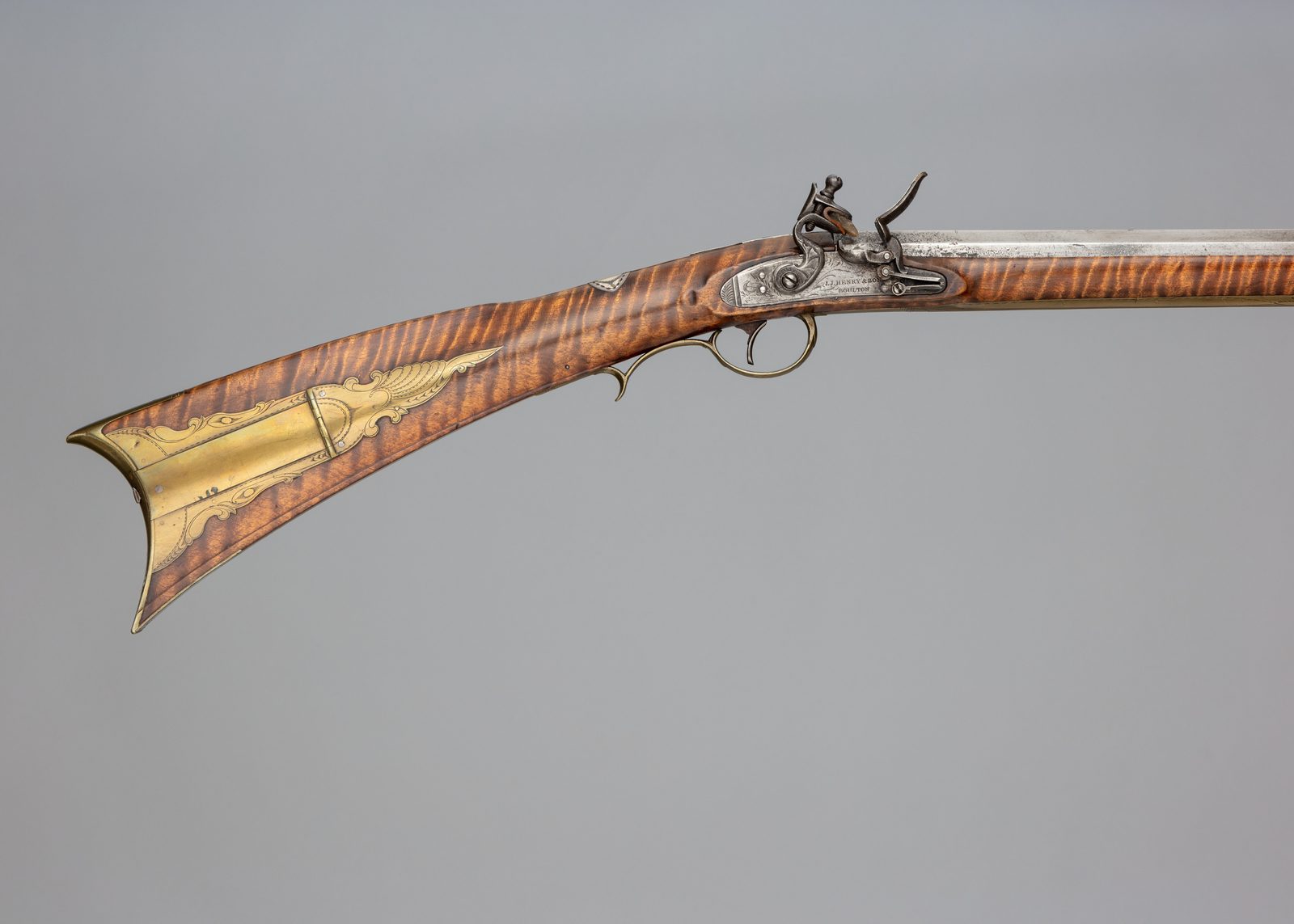
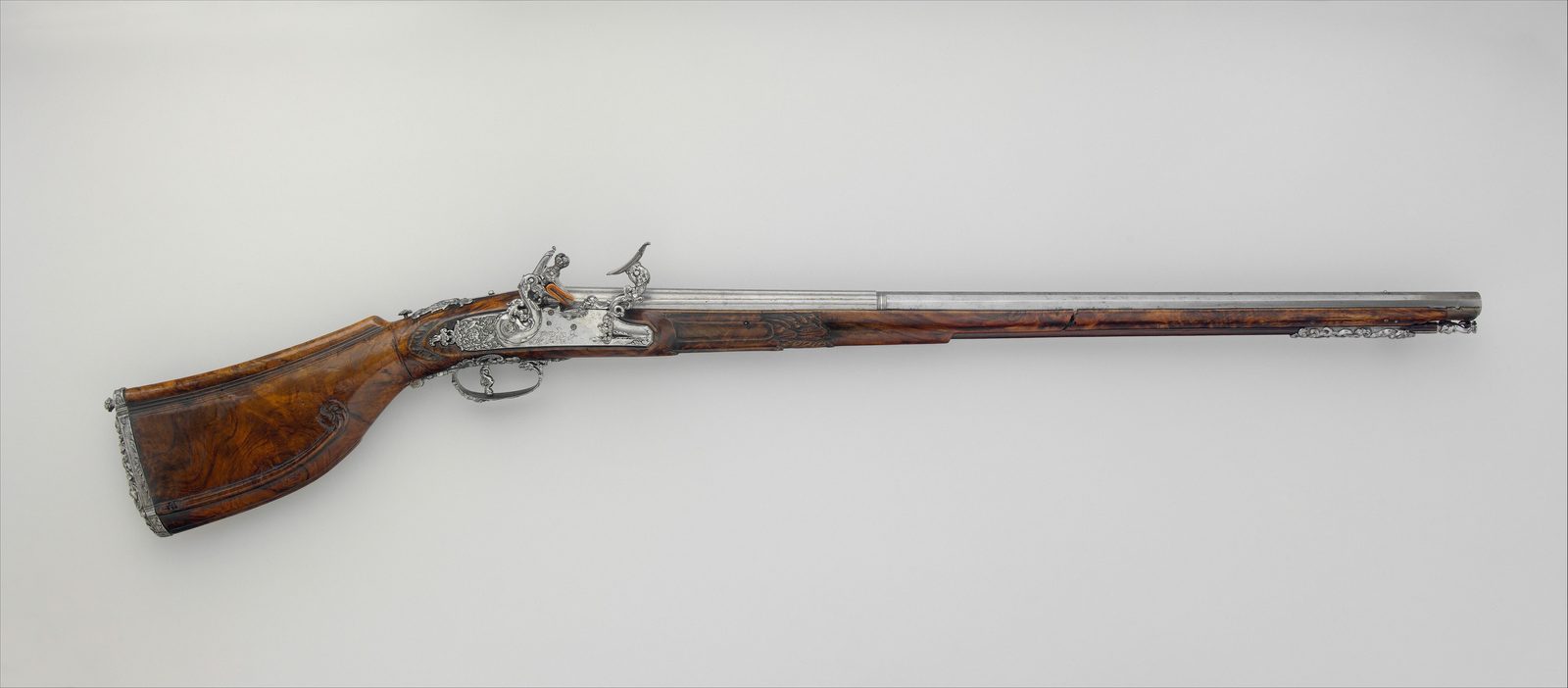
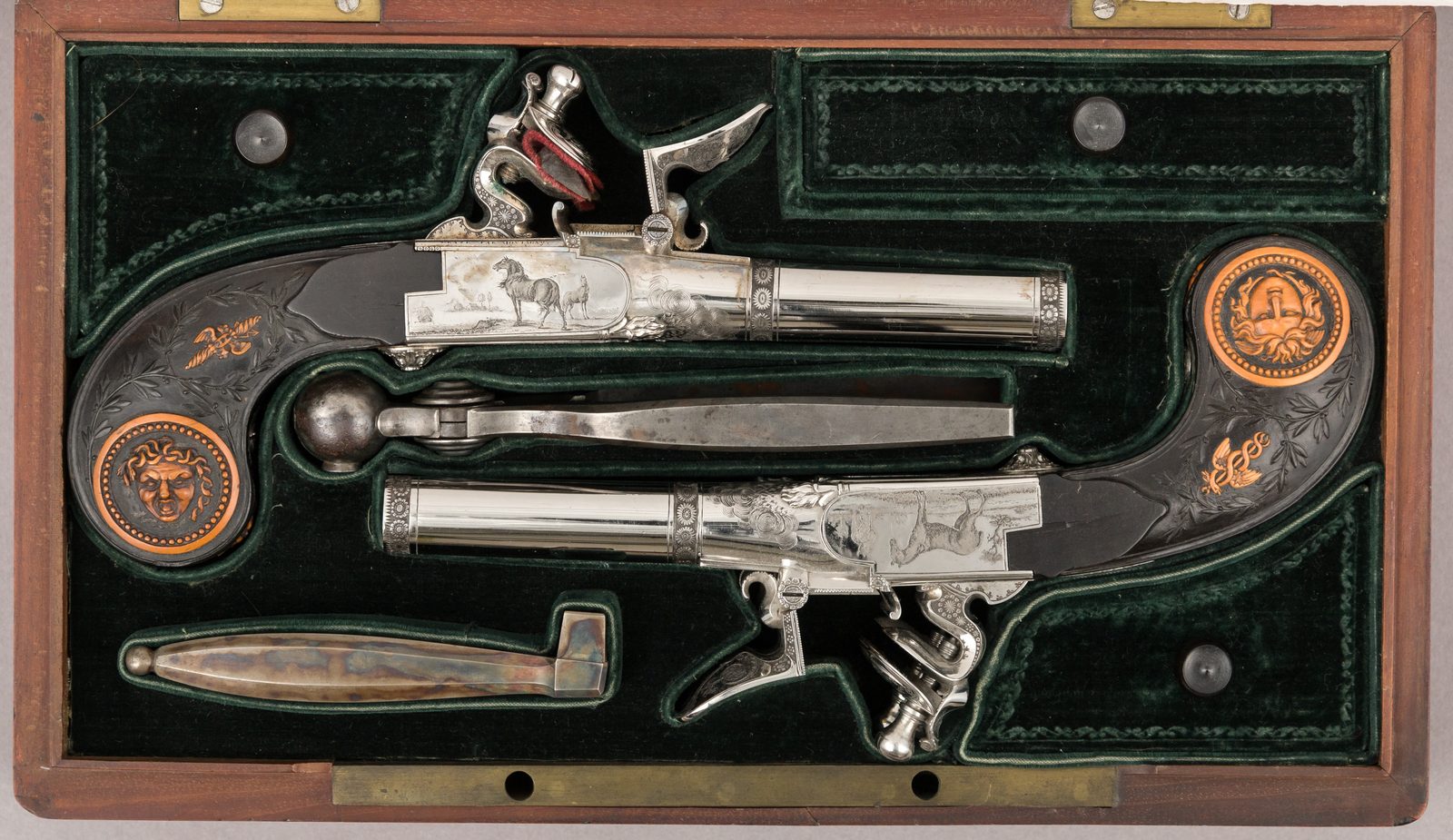
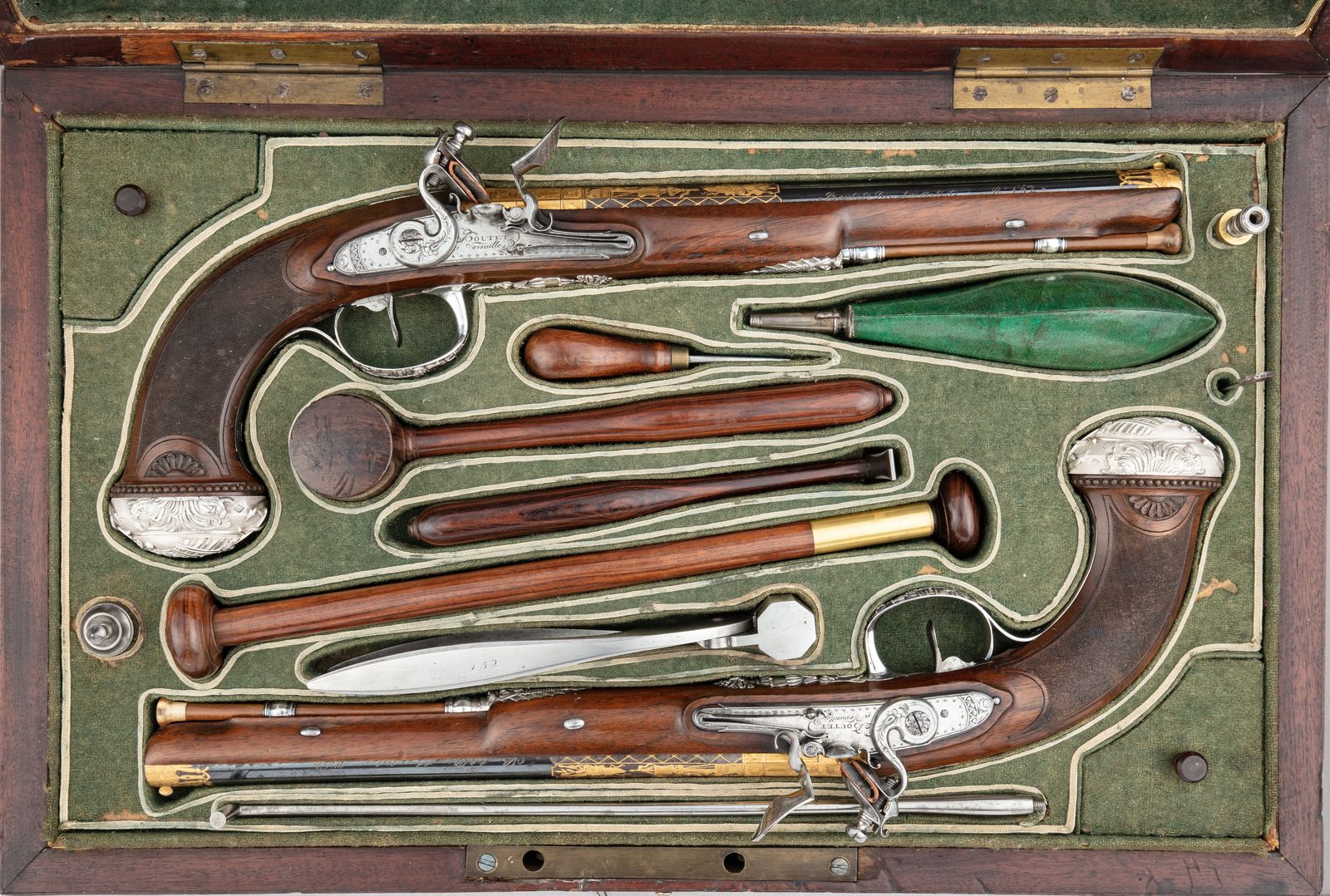
Plates from the flintlock era
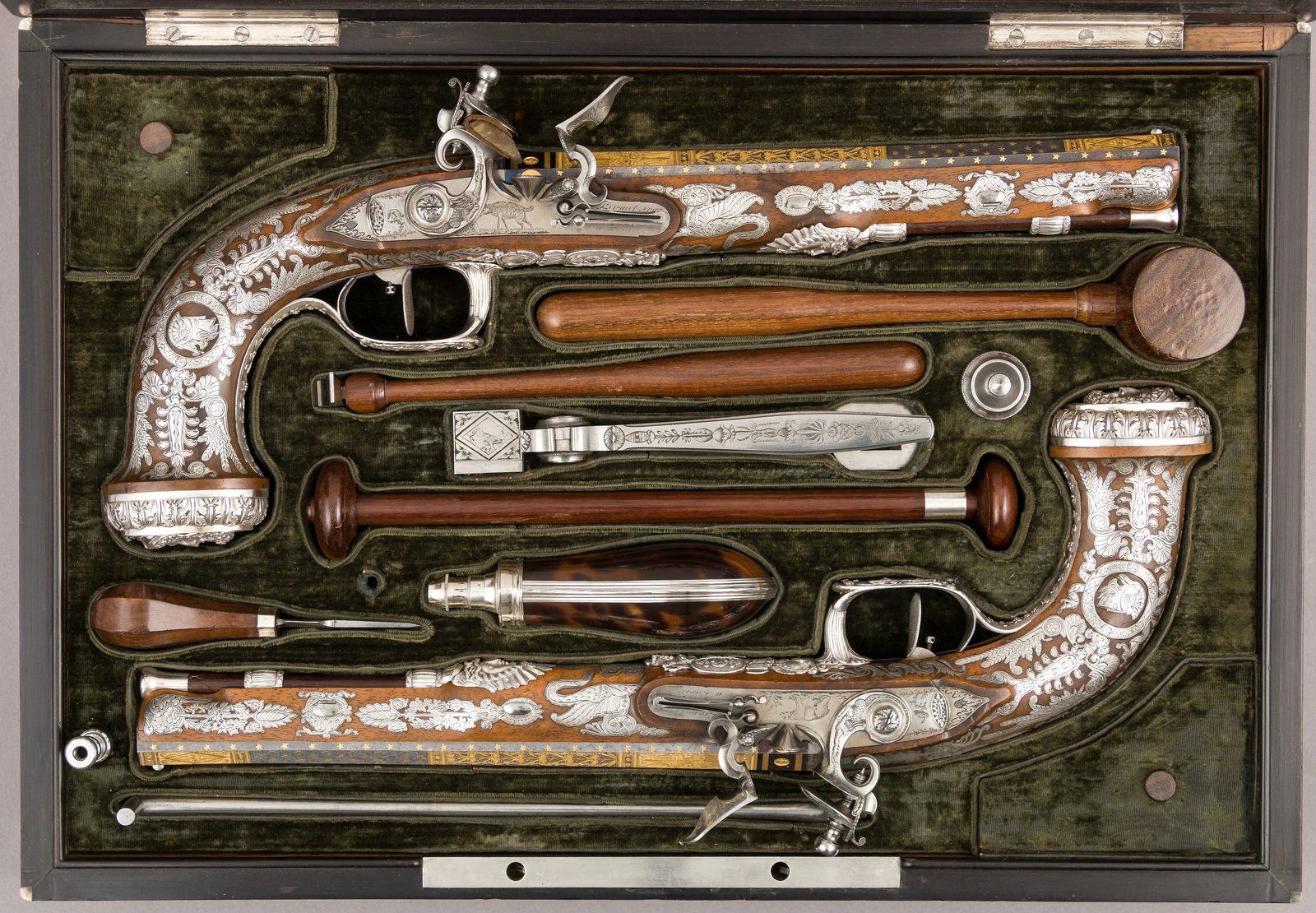
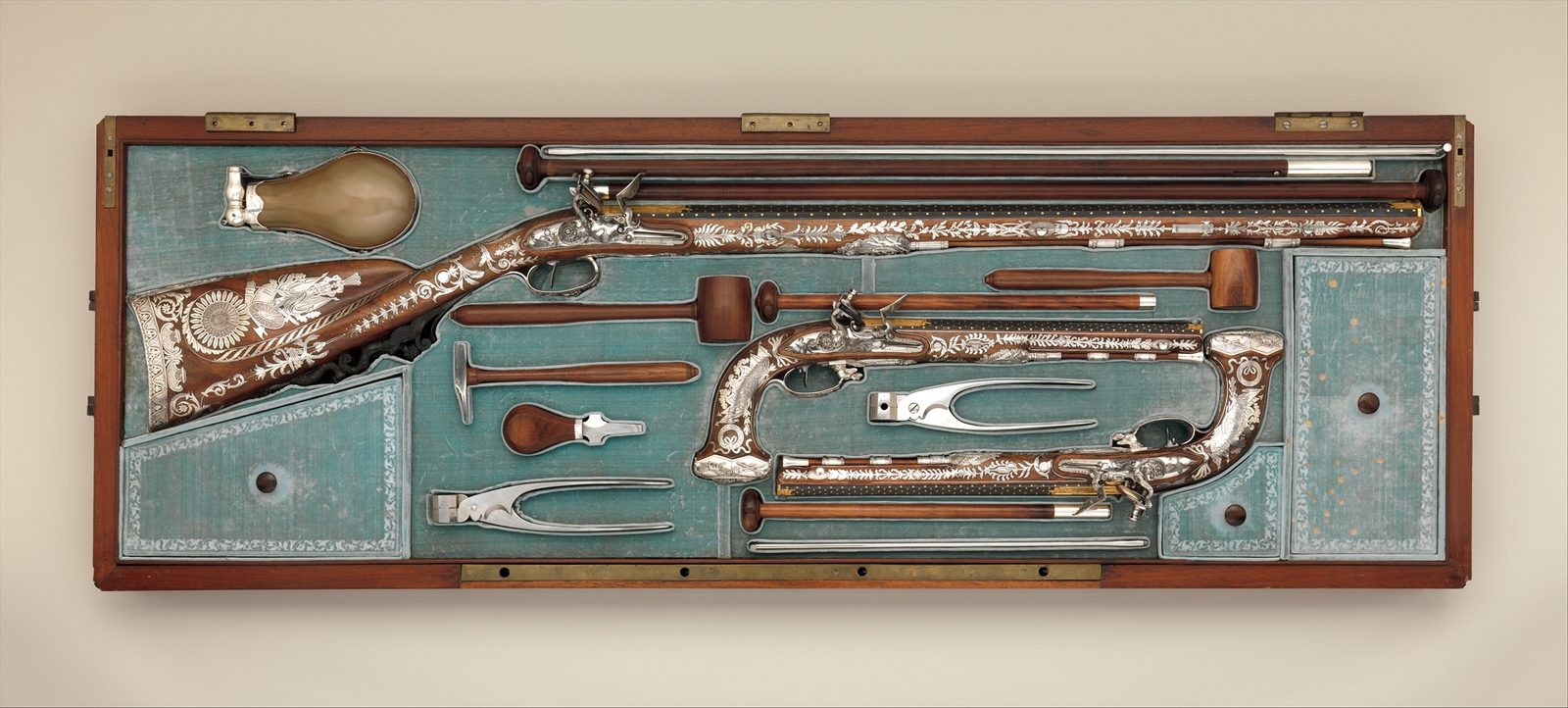
Nothing in the plate corpus is attached to the U.S. 1795 Springfield Flintlock Musket itself. The records behind this material identify a mechanism and a date but not a model, so it is grouped by how the arm fires rather than by which arm it is.
What these are, and are not
These are not photographs of the U.S. 1795 Springfield Flintlock Musket. They are arms sharing its ignition system, shown because the mechanism is the finest attribution the records behind them support.
Editorial state
What this entry is still missing
The score in the margin counts eight things. These are the ones it has not found yet, printed rather than hidden.
A general description
Nothing yet sets out what this pattern is and where it sits.
What tells it apart
The differences from the patterns either side of it — written from arms in hand rather than from books, which is why it waits.
The year production began
No production start year is recorded against this variant.
An assembly breakdown of its own
Assemblies are filed against the U.S. Military Flintlock Musket as a pattern, not against this variant.
Components filed against it
The 35 components documented here belong to the U.S. Military Flintlock Musket as a pattern.
A plate or photograph of the variant itself
Nothing depicts this variant specifically. The plates above are arms of the same ignition system, not of the same pattern.
A source anyone can check
No source is cited against this variant.
Butch Schoeller's own review
This entry is marked unverified.
Own one of these? Corrections and photographs go to butch@butchsantiquegunparts.com, and Butch answers them himself. A question asked on the Ask Butch page stays attached to this entry once it is answered.
Until it reaches 4 of 8 this entry is deliberately kept out of search results. A thin entry that ranks is worse for a reader than one that does not.